What Is GPTZero and Is It Accurate? A Complete 2026 Review
GPTZero is one of the most widely used AI content detectors. This review covers what it is, how it works, how accurate it really is, why it sometimes flags human writing, how it compares to alternatives — and what to do if it incorrectly identifies your text as AI-generated.
What Is GPTZero?
GPTZero is an AI content detection tool created by Edward Tian, a Princeton University student who built the first version in January 2023 during his winter break. The tool quickly gained widespread attention among educators and spread virally as concerns about ChatGPT use in academic settings grew.
The core purpose of GPTZero is to estimate whether a piece of text was written by a human or generated by a large language model such as ChatGPT, Claude, or similar tools. Since its initial release, the platform has expanded significantly — it now offers a web interface, a Google Docs add-on, an API for developers, and several subscription tiers for institutions and individual users.
GPTZero is not affiliated with OpenAI or any AI company. Despite the similar name, GPTZero and ChatGPT are completely separate products from different creators.
In short: GPTZero is an independent AI detection tool built to answer the question “did a human or an AI write this?” It’s widely used in education, publishing, and content review — and is one of the most recognized names in the AI detection space.
How Does GPTZero Work?
GPTZero uses two primary linguistic signals to evaluate whether text is AI-generated. These are the same foundational concepts used across most AI detection tools, but GPTZero was one of the first to articulate them publicly in accessible terms.
Perplexity
Perplexity measures how surprising or unpredictable a piece of text is to a language model. Human writing tends to have higher perplexity — people make unexpected word choices, take conversational detours, and produce text that a model wouldn’t easily predict. AI-generated text tends to follow the most statistically likely paths, resulting in low perplexity scores.
Burstiness
Burstiness measures variation in sentence complexity across a document. Human writers naturally mix short, direct sentences with longer, more complex constructions. AI outputs tend to maintain a consistent rhythm and uniform complexity — low burstiness. GPTZero evaluates how much this variation fluctuates across paragraphs.
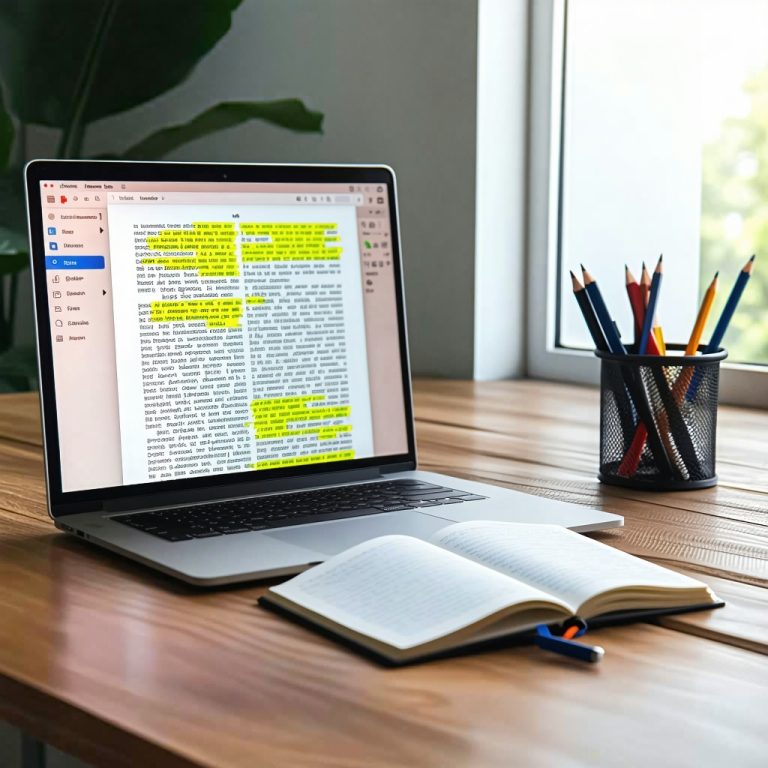
GPTZero evaluates both signals at the sentence level and produces a document-level probability score. The interface highlights individual sentences that contributed most to the AI score, giving reviewers a breakdown rather than just a single number.
Since 2023, GPTZero has expanded its detection approach beyond just perplexity and burstiness. The company has published that its model now incorporates additional signals and is retrained regularly on new AI model outputs to keep up with evolving writing styles from tools like GPT, Claude, Gemini, and others.
Does Turnitin use GPTZero?
No — Turnitin built its own proprietary AI detection model in-house and does not use GPTZero’s technology. The two are separate tools from separate companies. They use similar methodologies because the underlying concepts (perplexity, burstiness) are the standard approach to AI detection, but their training data, thresholds, and scoring are independent. A text that scores high on GPTZero will not necessarily produce the same result in Turnitin, and vice versa.
Is GPTZero Accurate?
GPTZero’s accuracy is context-dependent — it performs reliably in some scenarios and less reliably in others. This is true of all AI detection tools, not just GPTZero specifically.
Where GPTZero performs well
- Long-form AI-generated text with minimal editing — the low perplexity and uniform burstiness of unedited AI outputs are reliably flagged.
- Text generated with default ChatGPT settings — GPTZero was trained heavily on ChatGPT outputs and performs best on this category.
- Documents where most of the content is AI-generated — the sentence-level breakdown makes it easier to identify which sections are flagged when AI use is widespread.
Where GPTZero is less reliable
- Short text (under 250 words) — GPTZero’s own documentation acknowledges that shorter samples produce less stable results because there isn’t enough text for the statistical model to stabilize.
- Heavily edited AI text — manual revision that introduces varied sentence lengths and unexpected word choices reduces the AI signals GPTZero looks for.
- Non-native English writing — simplified, consistent syntax in ESL writing can resemble AI output and produce false positives.
- Formal academic or legal writing — highly structured, uniform writing styles have statistical properties that overlap with AI output.
- Newer AI models — models released after GPTZero’s last training update may produce text the detector hasn’t learned to recognize yet.
| Content type | GPTZero detection | Reliability |
|---|---|---|
| Unedited ChatGPT output (500+ words) | Usually flagged at high probability | High |
| Lightly paraphrased AI text | Often still flagged, score may drop | Medium |
| AI text with heavy human editing | Detection becomes unreliable | Variable |
| Short text (<250 words) | Unstable, acknowledged by GPTZero | Low |
| Formal academic human writing | False positives more common | Caution |
| ESL / multilingual writing | Elevated false positive rate | Lower |
Why Does GPTZero Say I Used AI When I Didn’t?
This is one of the most common complaints about GPTZero — and it reflects a genuine limitation of the technology rather than a malfunction. False positives (human writing flagged as AI) happen for specific, predictable reasons.
Common causes of false positives
- Highly formal or structured writing style. Academic writing, legal documents, and technical reports often have low sentence variation and predictable phrasing — the same statistical properties GPTZero associates with AI output.
- Non-native English. Simplified sentence structures and limited vocabulary range in ESL writing can mimic AI patterns. Researchers have documented that non-native writers face higher false positive rates across AI detection tools generally.
- Writing on well-documented, generic topics. If you’re writing about a subject with established phrasing conventions — basic history, introductory science — your word choices may align closely with how AI would describe the same topic, because AI was trained on the same canonical sources.
- Heavy editing and polishing. Removing imperfections from a draft — fixing awkward sentences, smoothing transitions — can inadvertently make the writing more uniform and lower its apparent perplexity.
- Short samples. Under 250 words, the model doesn’t have enough text to measure perplexity and burstiness accurately. Scores on short excerpts are inherently less stable.
If GPTZero flagged your writing incorrectly: Check the sentence-level breakdown to see which sentences triggered the flag. Often it’s a few uniform-sounding sentences rather than the whole document. Reviewing those specific sentences for variety and specificity is more useful than trying to change your overall style.
Why does GPTZero say everything is AI?
If GPTZero is consistently returning high AI scores on clearly human-written content, the most common explanations are: the text is very short (under 200 words), the writing is highly formal throughout, or the topic is one where standard phrasing is unavoidable. It can also happen when testing with text that has been copied from a source GPTZero’s model has internalized as AI-like — some genres of business writing, for example, share enough characteristics with AI outputs to produce consistently elevated scores.
Free AI content checker with sentence-level breakdown — no account needed.
Is GPTZero Free?
GPTZero offers a free tier with limited functionality. Here’s how the pricing breaks down as of 2026:
- Free plan: Basic AI detection with a word limit per scan (typically 5,000 words per document). Limited number of scans per month. No batch processing. Access to the web interface only.
- Essential plan (paid): Higher word limits, more scans per month, writing feedback features, and access to the Google Docs add-on.
- Premium / educator plans: Batch processing for multiple documents, API access, and features oriented toward classroom or institutional use.
For most individual users checking a single document, the free tier is functional — the core detection works, and the sentence-level breakdown is included. The paid tiers primarily add volume capacity and workflow integrations.
GPTZero’s pricing has changed since launch and may have updated after this article was written — check gptzero.me directly for current plan details.
How to Use GPTZero
The basic workflow for using GPTZero is straightforward:
- Go to gptzero.me and paste your text into the input field, or use the file upload option for supported document formats.
- Click the detection button. Results typically appear within a few seconds for standard-length documents.
- Review the overall probability score at the top of the results — GPTZero categorizes text as “likely human-written,” “mixed,” or “likely AI-generated.”
- Scroll through the sentence-level breakdown. Sentences highlighted in yellow or orange are the ones that contributed most to the AI score.
- Use the breakdown to identify which specific sections flagged — this is more actionable than the aggregate score alone.
GPTZero Google Docs add-on
GPTZero offers a Google Docs integration that allows you to run detection directly within a document without copying and pasting. Install it from the Google Workspace Marketplace by searching “GPTZero.” Once installed, it appears in the Extensions menu. The add-on requires a GPTZero account and the feature is available on paid plans. To remove it, go to Extensions → Manage add-ons in Google Docs and uninstall from there.
How Accurate Is GPTZero Compared to Turnitin?
GPTZero and Turnitin approach AI detection with similar underlying methodology but different implementation, training data, and thresholds. Direct comparison is complicated by the fact that Turnitin’s model is proprietary — there’s no published methodology to compare against. What’s observable from independent testing:
| Dimension | GPTZero | Turnitin AI checker |
|---|---|---|
| Free individual access | Yes (limited) | Institution only |
| Sentence-level breakdown | Yes | Yes |
| Paraphrase detection | Limited | Included |
| Plagiarism / similarity check | No | Yes (core feature) |
| Methodology transparency | Partially published | Proprietary, not published |
| False positive rate (ESL text) | Known issue | Known issue |
| Google Docs integration | Available | Draft Coach (limited) |
In practice, GPTZero and Turnitin don’t always agree on the same document. One tool may return a high AI score while the other returns low or mixed — this happens because they use different thresholds and were trained on different datasets. Neither result is necessarily more “correct.” If you’re checking your own work before an institutional Turnitin submission, GPTZero gives a useful but imperfect proxy signal.
GPTZero vs ZeroGPT — Which Is Better?
GPTZero and ZeroGPT are frequently confused due to their similar names, but they are entirely separate tools with no connection to each other. ZeroGPT is a separate AI detection product — it’s not a version of GPTZero, and the two were built independently.
Name confusion note: GPTZero (gptzero.me) was created by Edward Tian. ZeroGPT (zerogpt.com) is a separate tool from a different team. The similar naming is a coincidence that causes ongoing confusion in search results and student discussions.
In independent comparisons, both tools use similar perplexity-based methodology and produce broadly comparable results on clearly AI-generated text. The differences tend to appear in edge cases: their false positive rates for formal writing differ, their handling of short text differs, and their interface and scoring presentation differ. Neither has been definitively proven more accurate than the other across all text types — the “better” tool depends on your specific use case.
What to Do If GPTZero Flags Your Document
If GPTZero has flagged your genuinely human-written document, here’s a practical approach:
- Check the sentence breakdown. Identify which specific sentences scored high. This is usually a small subset of the document — fixing a few flagged sentences is more effective than rewriting everything.
- Look at sentence structure variety. If the flagged sentences are similar in length and structure, adding variation — shorter interjections, longer complex clauses — can lower the perplexity score.
- Add specific, personal, or contextual detail. AI tends to be generic. Specific examples, personal observations, and non-obvious word choices raise perplexity naturally.
- Don’t over-edit. Ironically, aggressive editing to “fix” AI flags can make writing more uniform — which lowers perplexity further. Aim for natural variation rather than systematic correction.
- If submitting for academic review: Keep earlier drafts and any notes that show your writing process. AI detection results alone are not considered sufficient evidence for misconduct — showing a revision history is more meaningful than arguing with a score.
On “bypassing” GPTZero: various approaches are discussed online (adding specific phrasing, restructuring paragraphs, using synonyms). These techniques can lower detection scores, but they generally involve rewriting the content substantially — at which point the question of whether the text is AI-generated becomes less meaningful. No reliable, systematic bypass exists that leaves the content unchanged.
Run a free check with sentence-level breakdown — no signup required.
Frequently Asked Questions About GPTZero
GPTZero is a useful screening tool but not a reliable standalone arbiter for academic misconduct decisions. Its false positive rate — particularly for non-native writers and formal academic prose — is well-documented. Most academic integrity researchers and legal advisors agree that AI detection output should be treated as a flag for investigation rather than evidence of AI use. Institutional policies vary on how GPTZero scores factor into formal processes.
GPTZero was created by Edward Tian, a Princeton University student who built the original version in January 2023 over his winter break. His motivation was the rapid adoption of ChatGPT in academic settings and the gap in tools available to help educators understand whether submitted work was human-authored. The tool went viral after he posted about it, and he subsequently built it into a company.
GPTZero experiences occasional downtime during periods of high traffic — particularly around academic deadlines and when detection-related topics trend in the news. If the tool isn’t loading or returning results, checking GPTZero’s status page or their social channels usually indicates whether there’s a known outage. Trying again after 15–30 minutes resolves most temporary issues.
To cancel a GPTZero subscription, log in to your account and go to account settings or billing. The cancellation option should be available under your plan details. If you signed up through a third-party payment processor, the cancellation process may go through that platform instead. GPTZero’s support team can assist if the cancellation option isn’t visible — their contact details are in the help section of their site.
In GPTZero’s context, perplexity refers to how predictable a piece of text is to a language model. Low perplexity means the text follows statistically expected patterns — characteristic of AI outputs that tend to choose the most probable next word. High perplexity means the text is more surprising and unpredictable, which is typical of human writing. GPTZero measures perplexity at the sentence level and uses it alongside burstiness (sentence-to-sentence variation) to produce its AI probability score.
Neither tool has been definitively proven more accurate across all content types in published research. Both use perplexity-based methodology and produce broadly similar results on clearly AI-generated text. GPTZero has more transparent documentation about its approach and a longer track record of updates. ZeroGPT has a simpler free interface. For most users, the differences are less important than understanding the limitations both share: short text, formal writing, and ESL content produce less reliable results regardless of which tool you use.

Chloe Brooks is a computational linguistics researcher and science communicator with a background in natural language processing. She completed her graduate studies at Carnegie Mellon University, where her thesis examined stylometric differences between human and AI-generated academic text. After graduating, Chloe worked briefly as a data scientist for a content moderation startup before deciding to focus on public-facing writing about language and AI. She now writes in-depth technical analyses of AI detection platforms, explaining how they work under the hood and where their statistical models tend to break down. Her work bridges the gap between academic research and practical tool evaluation.